Background | The issue
The current policy to support operationalisation requires chassis suppliers to create a brand-new Component Type Approval (CTA) every time new Australian Design Rules (ADRs) are added. Prior to the introduction of the RVSA legislative framework, there was no requirement to do this under the Motor Vehicle Standards Act (MVSA). MVSA allowed for red plates to be affixed to a vehicle by that chassis OEMs.
The current policy supporting the RVSA is problematic for a range of reasons:
Industry demands
BIC and the members who raised this have been advocating for the policy position to be changed so that a new ADR can be added as a variation to an existing bus chassis CTA.
This is so that
Customers don’t see delayed deliveries.
As a result of several meetings between BIC, the members who raised concerns and DITRDCA, we have made significant progress. DITRDCA has now agreed to new ADRs be added as a variation to existing bus chassis CTAs.
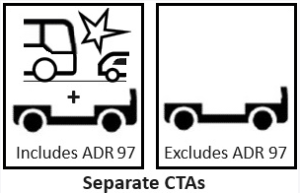
It should be noted, though, that this is on the proviso that all ADRs listed in the CTA apply to every chassis under that CTA. This second part still has complexities for ADRs that have listed exemptions, most notably exemptions for buses carrying standees. Such an example is ADR97 – Advanced Emergency braking (AEB), which is not mandatory on buses carrying standees. Using this example, the same model chassis would have two different CTAs – one for the chassis fitted with AEB and one for the chassis that doesn’t have AEB fitted.
We are continuing to work with DITRDCA, advocating for changes to improve and more efficiently manage these exemptions. This is so that they can be covered under one CTA rather than two, however, such changes will require the RVSA legislation to be changed through parliament. This is unlikely to occur until the RVSA policy undergoes its 5-year review late next year and BIC can formally request it.
If you have any questions or concerns, please do not hesitate to contact us.